
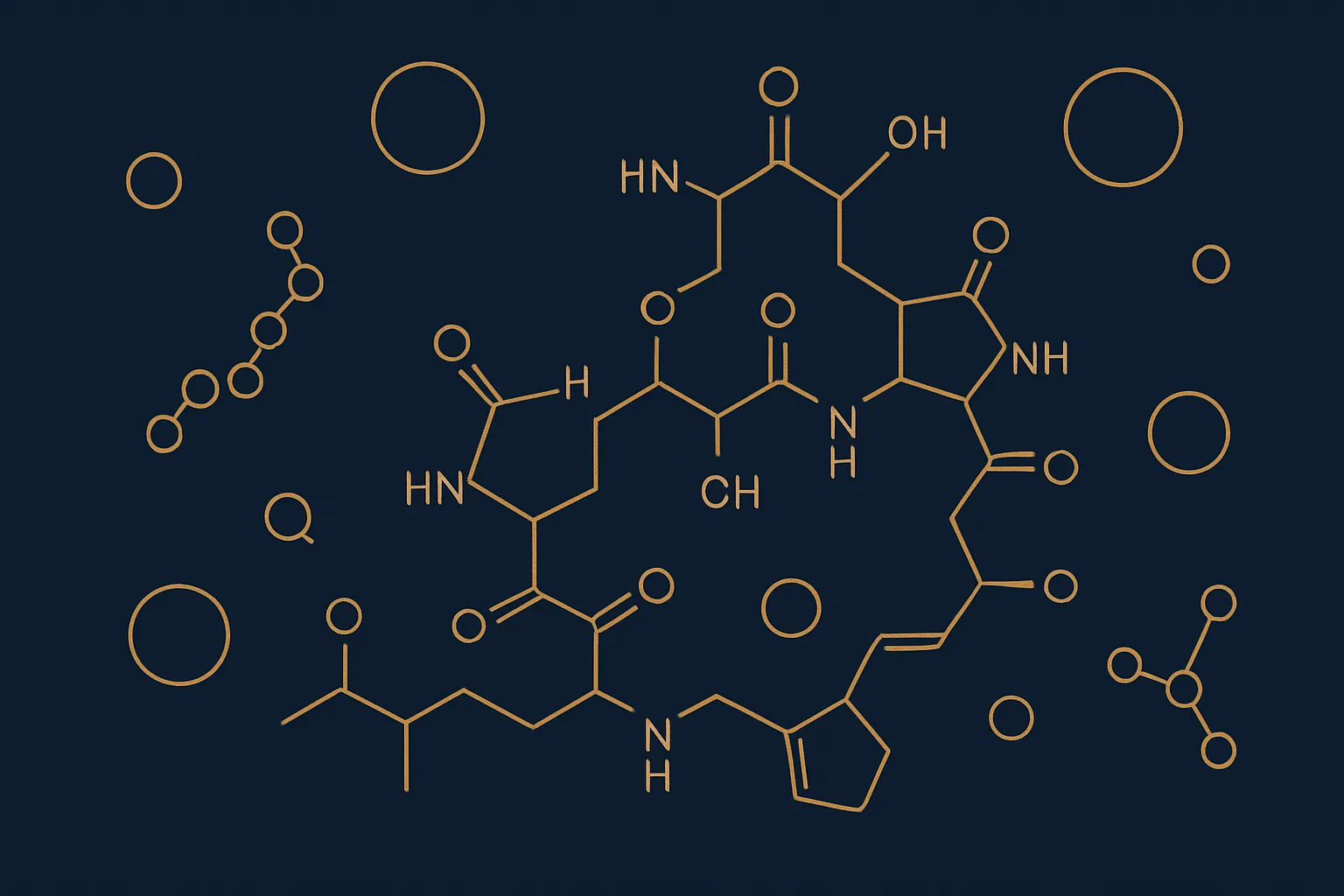
Melanotan II is a synthetic peptide that has been the subject of study in research on skin pigmentation and its relationship with melanocortin receptors. This peptide is derived from the melanocyte-stimulating hormone (MSH) and has primarily been investigated in preclinical models to understand its effect on melanin production.
What is Melanotan II?
Melanotan II is an analog of the natural hormone that stimulates melanin production in the skin. This peptide has been observed to activate melanocortin receptors, which are crucial in regulating pigmentation. In preclinical models, Melanotan II has been shown to induce a tanning effect similar to that obtained from exposure to sunlight, generating considerable interest in the scientific community.
Mechanism of Action
The mechanism of action of Melanotan II focuses on its ability to bind to melanocortin receptors, specifically the subtypes MC1R, MC3R, and MC4R. By activating these receptors, a signaling cascade is triggered that results in the stimulation of melanin production by melanocytes, the cells responsible for skin pigmentation.
Studies in Preclinical Models
- Melanin Production: In studies conducted in cell cultures and animal models, it was observed that the administration of Melanotan II increases melanin levels in the skin.
- Protection Against UV Damage: Some studies suggest that the activation of melanocortin receptors may provide additional protection against damage caused by UV radiation, which could have significant implications in the research of skin treatments.
- Appetite Regulation: In addition to its effect on pigmentation, Melanotan II has been studied for its influence on appetite regulation, although this is outside the scope of this article.
Melanotan and Tanning
The ability of Melanotan II to induce tanning has led to speculation about its use in aesthetics; however, it is essential to note that all studies conducted to date have been for research purposes only. The application of Melanotan II in a clinical or aesthetic context has not been approved and its use in humans is not recommended.
Ethical and Safety Considerations
Research on Melanotan II raises several ethical and safety considerations. As research progresses, it is crucial to ensure that proper protocols are followed and that thorough studies are conducted to evaluate the safety and efficacy of the peptide. Researchers must consider potential side effects and variability in individual responses.
Conclusion
Melanotan II represents an intriguing area of research in the field of skin pigmentation and the biology of melanocortin receptors. Although significant advances have been made in preclinical models, further studies are needed to fully understand its potential and implications. Research should continue to focus exclusively on laboratory environments and preclinical models.