
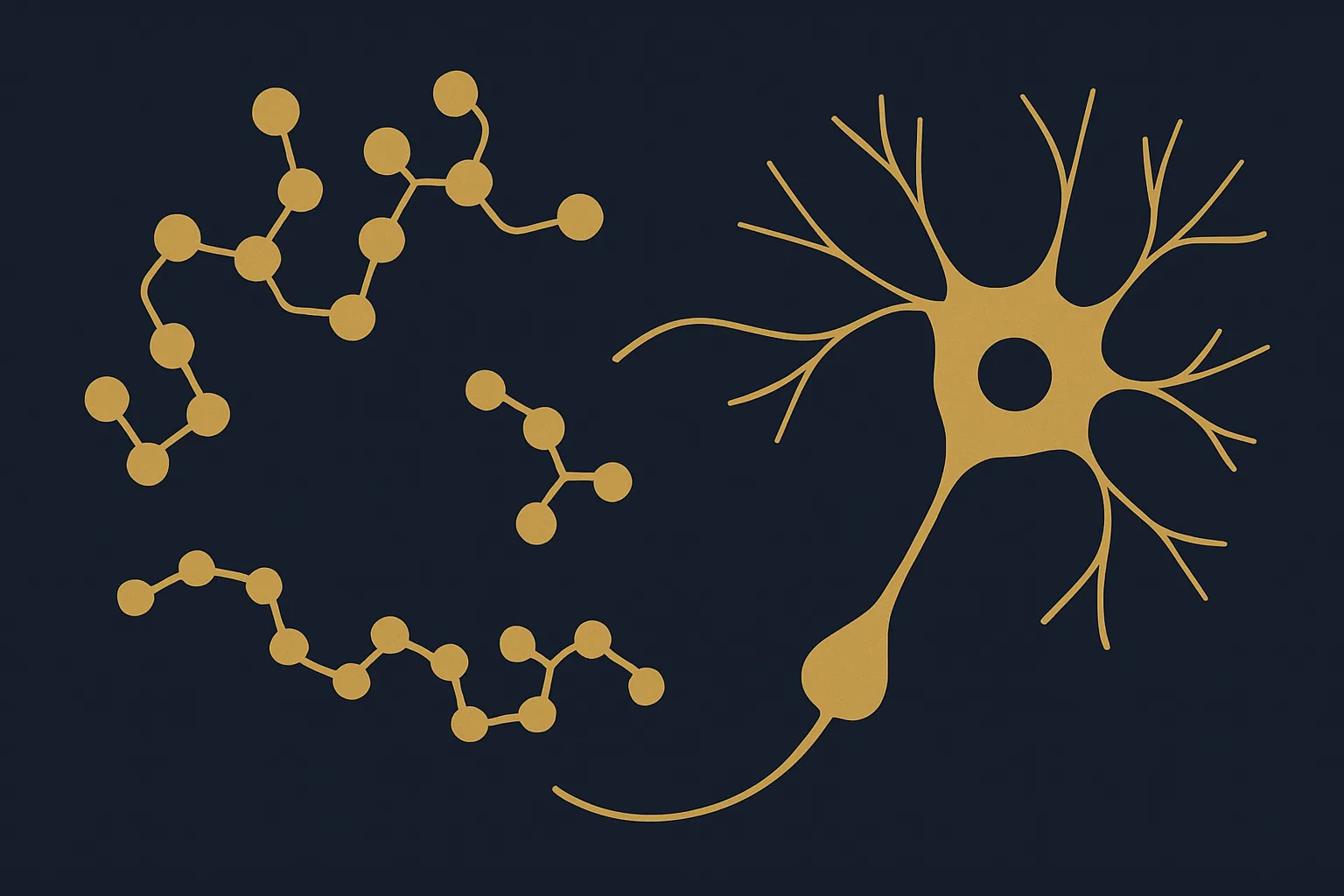
The melanocortin system comprises five receptor subtypes (MC1R–MC5R) with distinct anatomical distributions, G-protein coupling profiles, and functional roles. PT-141 (bremelanotide) exhibits preferential affinity for MC3R and MC4R, making its central pharmacology dependent on the neuroanatomical distribution of these receptors within hypothalamic and limbic circuits. This article provides a detailed review of MC3R/MC4R neuroanatomy, the second messenger cascades downstream of receptor activation, and the specific pharmacological properties of PT-141 relevant to central arousal and motivational research.
MC3R and MC4R: Neuroanatomical Distribution and Circuit Roles
MC4R (gene MCHR4, 332 amino acids, Gs-coupled) is the most widely expressed melanocortin receptor in the CNS, with particularly high density in: paraventricular nucleus of the hypothalamus (PVN—energy homeostasis, autonomic regulation), medial preoptic area (MPOA—social and reproductive behavior, thermal regulation), bed nucleus of the stria terminalis (BNST—anxiety/stress integration), periaqueductal gray (PAG—pain modulation, autonomic output), amygdala (central nucleus, CeA—fear and threat processing), nucleus accumbens (NAc—reward processing, motivational salience), and locus coeruleus (LC—arousal and attention). MC3R (gene MCHR3, 323 amino acids, Gs-coupled) has a more restricted distribution: primarily hypothalamic nuclei (arcuate, ventromedial, dorsomedial) and limbic regions (hippocampus, septum, BNST). MC3R functions as a presynaptic autoreceptor on POMC/AgRP neurons in the ARC, providing feedback inhibition of melanocortin tone—a fundamentally different functional role than MC4R's primarily postsynaptic modulation of downstream circuits.
Second Messenger Cascades: cAMP/PKA and Downstream Effectors
MC3R and MC4R are both Gs-coupled, activating adenylyl cyclase → cAMP elevation → PKA activation. PKA phosphorylates: CREB (Ser133)—transcriptional activation driving CRF, neuropeptide Y, and BDNF gene expression; L-type voltage-gated Ca²+ channels—increasing Ca²+ influx and neuronal excitability; and KATP channels (via phosphodiesterase cascade)—modulating membrane potential. In MPOA MC4R-expressing neurons, cAMP/PKA activation depolarizes the cell by closing Kir3.1/3.2 (GIRK) channels that normally maintain resting membrane potential near −65 mV, shifting it to −55 mV and increasing action potential firing probability. This increased excitability of MPOA projection neurons reduces GABAergic inhibition onto VTA dopamine neurons (disinhibition), explaining the downstream dopaminergic activation observed in NAc microdialysis studies following bremelanotide administration. The cAMP response also drives c-Fos expression (detectable 60–90 minutes post-treatment by immunohistochemistry), providing a standard anatomical mapping tool for bremelanotide circuit activation.
PT-141 Receptor Pharmacology: Binding Parameters and Selectivity
PT-141's binding characteristics determined by competitive displacement of [¹²⁵I]-NDP-α-MSH: Ki values at human cloned receptors are approximately 0.4 nM (MC1R), 5.3 nM (MC3R), 1.3 nM (MC4R), and 22 nM (MC5R). This profile gives PT-141 approximately 4-fold preferential selectivity for MC4R over MC3R (based on Ki ratios). In functional cAMP assays (EC₅₀ measurement), PT-141 shows EC₅₀ of ~1.5 nM at MC4R (partial agonist, ~70–80% maximum response relative to NDP-α-MSH full agonist). This partial agonism at MC4R may explain PT-141's relatively cleaner behavioral selectivity versus full MC4R agonists like MT-II, which exhibit higher incidence of side effects including yawning and penile erection in rodents through off-target MC3R effects or overactivation of PVN autonomic circuits.
Research Model Design: MC4R Circuit Mapping and Endpoint Selection
- Circuit activation mapping: c-Fos immunohistochemistry (MPOA, PVN, ARC, VTA) at 90 min post-SC injection; MC4R ChIP in MPOA for cAMP-response element binding
- Receptor specificity controls: HS014 (MC4R-selective antagonist, i.c.v.), SHU9119 (MC3R/MC4R antagonist, broader); compare with MC4R knockout mouse data
- Dopamine circuit readouts: NAc in vivo microdialysis (DA, DOPAC), VTA single-unit electrophysiology (firing rate, burst frequency)
- PT-141 dosing: 0.1–3.0 mg/kg SC in rodents; t_max ~60–90 min; avoid repeated daily dosing due to receptor desensitization
- Purity standard: HPLC >99%, lot-traceable CoA; cyclic peptide, stable in solution 48h at 4°C
All compounds described are for laboratory and research use only. They are not approved for therapeutic, diagnostic, or clinical use in humans outside of their regulatory-approved indication (bremelanotide is FDA-approved as Vyleesi for HSDD at specific clinical dose; research use of higher or alternative doses/formulations is not clinical use).